

Duration
5 years
Starting Date
August
Tuition Fee
$29,010 per year
Location
Baltimore, MD, United States
About the program
Housed within the Department of Psychology, the program awards a Doctor of Philosophy (Ph.D.) degree designed to foster advanced scientific research and evidence-based interventions in real-world settings. Candidates investigate cognitive, socioemotional, and biological growth within everyday environments, with a dedicated focus on child, family, and school well-being in inner-city, lower-income, and culturally diverse communities. Practical research and field experiences are integral to doctoral training: candidates conduct empirical research alongside faculty-led laboratories and complete applied field practica across community settings, educational institutions, early intervention centers, and human service agencies throughout the region.
The doctoral curriculum combines rigorous methodological training with foundational knowledge in developmental processes and applied contexts. Students select from three specialized concentrations: Early Development and Early Intervention, Socioemotional Development of Children, or Educational Contexts of Development. Coursework encompasses developmental theory, ethical and professional issues, advanced quantitative methods, public policy, and assessment. Doctoral candidates complete supervised field practica, design and defend a master’s thesis, pass qualifying examinations, and execute an original doctoral dissertation research project.
Graduates transition into influential research, academic, administrative, and policy roles across higher education, healthcare networks, government entities, and non-profit research institutes. Common career titles include university professor, director of surveys and analysis, manager of school behavioral services, clinical research coordinator, and educational consultant. Alumni frequently secure positions within academic institutions, school districts, health departments, pediatric research centers, and advocacy organizations across Maryland and nationwide.
Courses Included:
- Ethical and Professional Issues in Psychology
- Research Design and Applied Methodology
- Quantitative Methods and Statistical Analysis
- Early Intervention and Risk Factors in Early Development
- Socioemotional Development in Cultural Contexts
- Educational Contexts and Cognitive Development
- Psychological Assessment of Children and Families
Other interesting programs
-
-

Artificial Intelligence, M.S.
- UMBC’s Master of Science (M.S.) in Artificial Intelligence provides an advanced pathway beyond a general computing degree. Housed within the…
UMBC’s Master of Science (M.S.) in Artificial Intelligence provides an advanced pathway beyond a general computing degree. Housed within the Department of Computer Science and Electrical Engineering (CSEE), the STEM-designated program focuses on the foundational, computational, and applied dimensions of intelligent systems.
-
-
-
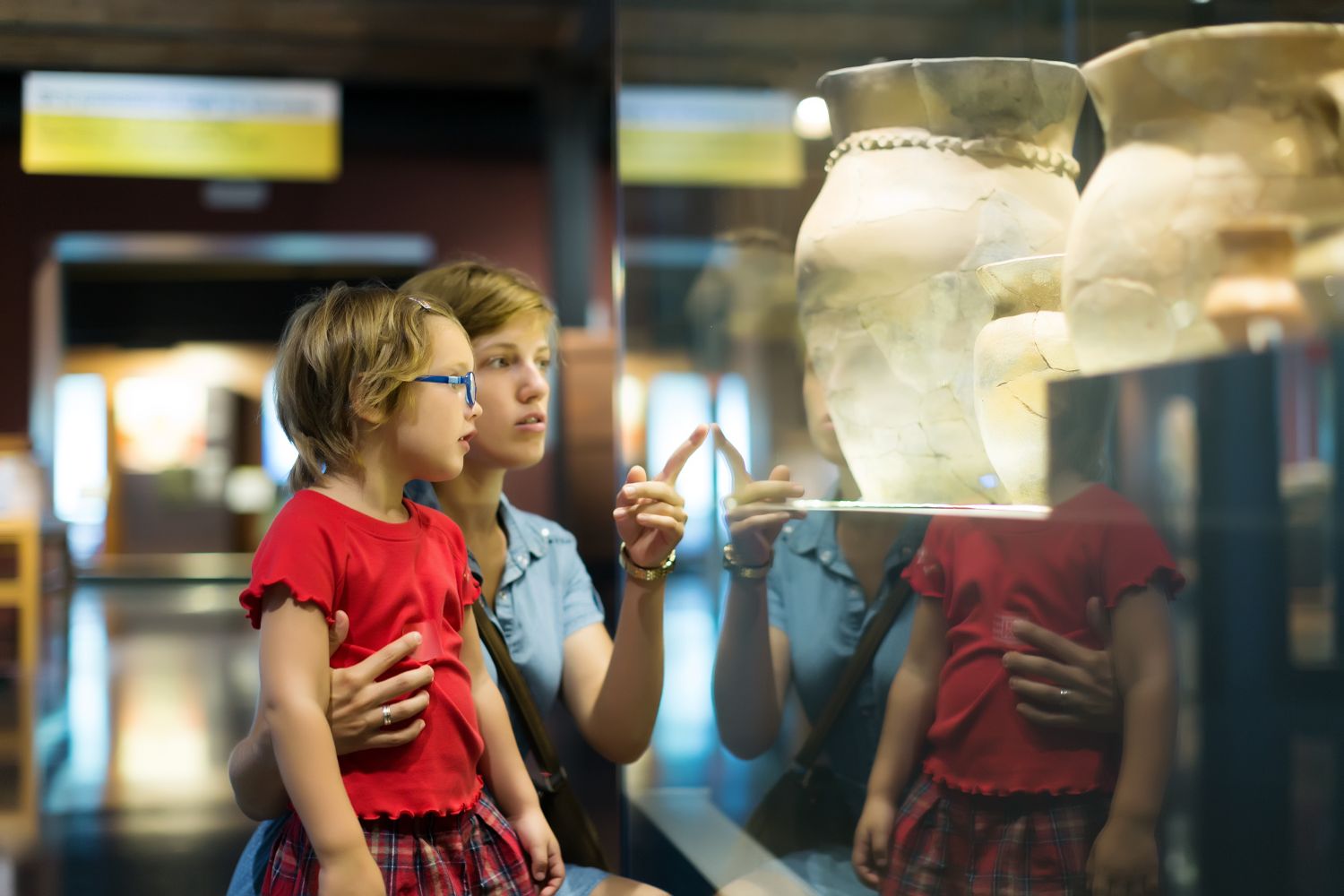
Art History and Museum Studies, B.A.
- The Art History and Museum Studies concentration in UMBC’s Department of Visual Arts explores the history of world art as…
The Art History and Museum Studies concentration in UMBC’s Department of Visual Arts explores the history of world art as a visual record of human culture, connecting traditional art forms with 20th- and 21st-century developments in photography, film, video, graphic design, and computer art.
-
-
-

Cinematic Arts, B.A.
- The Cinematic Arts concentration in UMBC’s Department of Visual Arts pairs rigorous hands-on digital film production with fine-arts theory, equipping…
The Cinematic Arts concentration in UMBC’s Department of Visual Arts pairs rigorous hands-on digital film production with fine-arts theory, equipping students with both technical expertise and conceptual depth.
-
-
-

Information Systems, B.S.
- Bridging computer science with administrative leadership, the Information Systems program at UMBC focuses on how technology, organizations, and people intersect…
Bridging computer science with administrative leadership, the Information Systems program at UMBC focuses on how technology, organizations, and people intersect to solve modern business challenges.
-
-
-

Mathematics, B.S.
- Mathematical inquiry at UMBC ranges from pure theoretical discovery to computational modeling of complex physical, biological, and economic systems.
Mathematical inquiry at UMBC ranges from pure theoretical discovery to computational modeling of complex physical, biological, and economic systems.
-
-
-

Statistics, B.S.
- UMBC’s Statistics program equips students with the mathematical foundation and computational tools to uncover meaningful insights from complex datasets.
UMBC’s Statistics program equips students with the mathematical foundation and computational tools to uncover meaningful insights from complex datasets.
-
-
-
Actuarial Science, B.S.
- The undergraduate programs of the Department of Mathematics and Statistics offer an area of specialization in Actuarial Science as an…
The undergraduate programs of the Department of Mathematics and Statistics offer an area of specialization in Actuarial Science as an option.
-
-
-

Chemical Engineering, B.S.
- UMBC’s Chemical Engineering program prepares students to transform molecular-level concepts into large-scale industrial technologies. Housed within the Department of Chemical,…
UMBC’s Chemical Engineering program prepares students to transform molecular-level concepts into large-scale industrial technologies. Housed within the Department of Chemical, Biochemical, and Environmental Engineering (CBEE), the program awards an ABET-accredited Bachelor of Science (B.S.) degree. Undergraduates gain rigorous theoretical knowledge and hands-on laboratory experience, analyzing physical, chemical, and biological processes to design efficient, safe, and sustainable systems. Students actively engage in faculty-led research in state-of-the-art laboratories, focusing on cutting-edge fields such as biomanufacturing, biosensors, nanomaterials, air quality, and renewable energy technologies.
-
-
-

Marine, Estuarine and Environmental Sciences, M.S.
- Marine Estuarine Environmental Sciences (MEES) is an interdisciplinary, inter-institutional, statewide graduate program within the University System of Maryland (USM) whose…
Marine Estuarine Environmental Sciences (MEES) is an interdisciplinary, inter-institutional, statewide graduate program within the University System of Maryland (USM) whose mission is to educate students to become the scientific leaders and problem-solvers of the future.
-
-
-

Cybersecurity, M.S.
- UMBC’s Master of Science (M.S.) in Cybersecurity is designated by the National Security Agency (NSA) and the Department of Homeland…
UMBC’s Master of Science (M.S.) in Cybersecurity is designated by the National Security Agency (NSA) and the Department of Homeland Security (DHS) as a National Center of Academic Excellence in Cyber Research (CAE-R).
-
-
-

Applied Sociology, M.A.
- UMBC’s Master of Arts (M.A.) in Applied Sociology equips graduate students with the analytical skills and theoretical frameworks necessary to…
UMBC’s Master of Arts (M.A.) in Applied Sociology equips graduate students with the analytical skills and theoretical frameworks necessary to analyze and address real-world social issues.
-
-
-

Geographic Information Systems M.P.S.
- UMBC’s Master of Professional Studies (M.P.S.) in Geographic Information Systems (GIS) provides advanced technical and theoretical training in spatial analysis,…
UMBC’s Master of Professional Studies (M.P.S.) in Geographic Information Systems (GIS) provides advanced technical and theoretical training in spatial analysis, web-GIS development, cartography, and spatial programming.
-